
Boutique Hotel Web Design in the UK: Cotswolds, Cornwall, Scotland and What the Market Requires
The United Kingdom has one of the most developed boutique hotel markets in the world. The country house hotel, the converted coaching inn, the coastal retreat, the Scottish highland lodge these are categories that have existed for generations and continue to attract guests who are willing to pay significantly for the right experience.
They are also categories where digital presentation has traditionally lagged behind physical quality. Many of the UK's most remarkable boutique properties properties with centuries of history, exceptional food, and interiors designed by some of the country's best talent have websites that do not reflect any of this.
The result is a consistent pattern: properties that could command premium rates and direct bookings instead find themselves competing on price, dependent on third-party platforms, and struggling to communicate what makes them genuinely worth choosing.
The UK Boutique Hotel Market: Regional Character
The Cotswolds
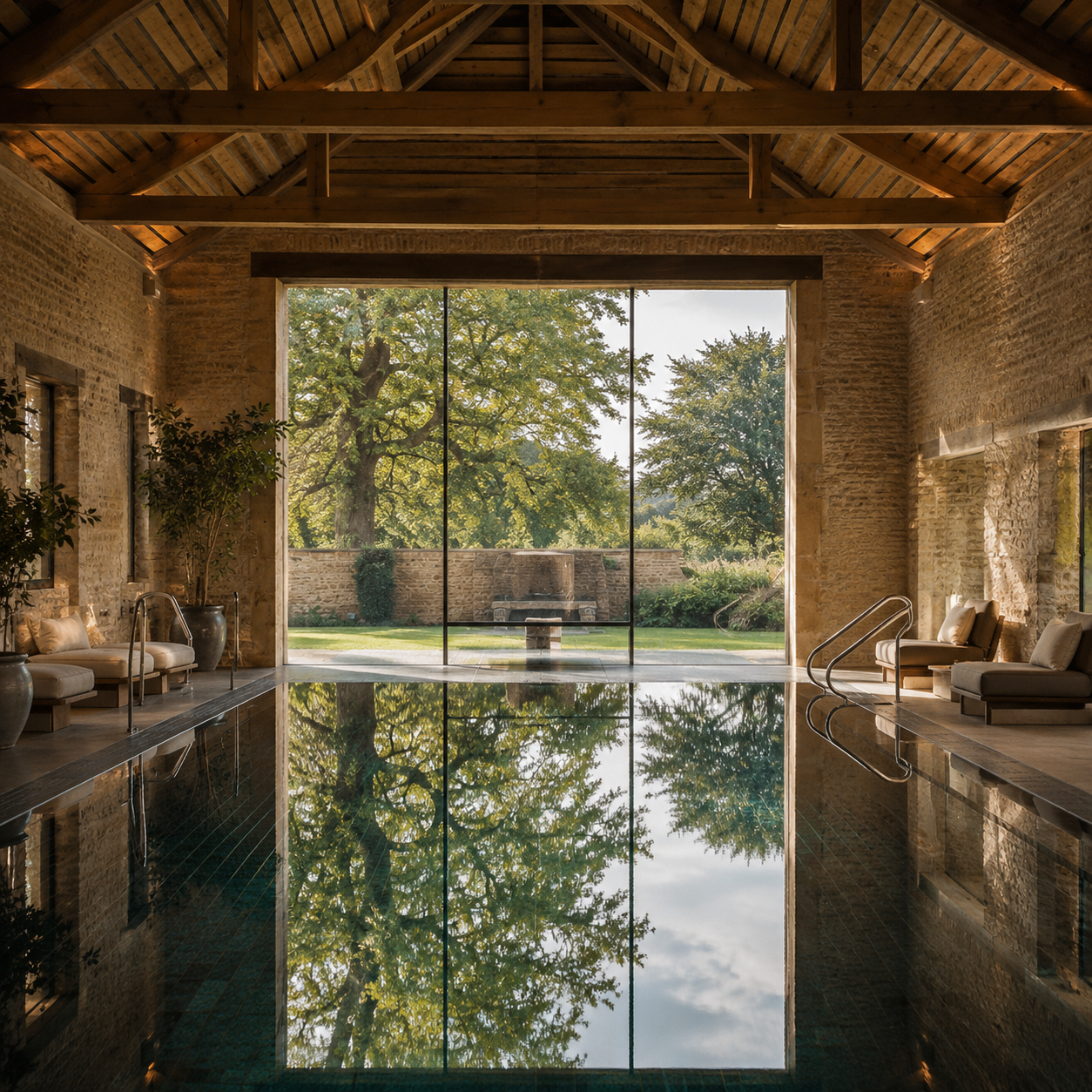
The Cotswolds is one of the most searched hospitality destinations in the UK. The combination of accessible location, strong aesthetic identity honey-coloured stone, market towns, managed countryside and a well-established reputation for high-quality food and hospitality makes it a perennial draw for domestic and international guests.
It is also a crowded market. There are hundreds of boutique properties within a relatively small area, all competing for the same guests. In this environment, digital positioning is not a luxury it is the primary mechanism of differentiation.
The most effective Cotswolds boutique hotel websites do something specific: they communicate the individual character of the property rather than leaning on the general appeal of the destination. A converted manor house outside Burford is not the same as a boutique inn in Chipping Campden. The website should make this distinction immediately clear.
Cornwall
Cornwall has undergone a significant transformation in its hospitality market over the last fifteen years. What was once primarily a domestic summer destination has evolved into a year-round market attracting guests from across Europe and beyond guests who are looking for coastal experience with genuine quality.
The Cornish boutique hotel market now includes properties at genuine European luxury level. The challenge for many of these properties is that their websites still communicate the old version of Cornwall a slightly apologetic seaside aesthetic rather than the confident, design-led experience they actually offer.
A website for a contemporary Cornish boutique property needs to be confident. It needs to communicate that this is a destination and a product that can be compared favourably with anything in Europe not positioned as a pleasant domestic alternative.
Scotland
Scotland's boutique hospitality market is built around a specific kind of experience: the remote lodge, the highland estate, the converted castle. Guests who choose Scotland for a boutique stay are typically choosing an experience of landscape and solitude that is not available elsewhere in the UK or, in many cases, in Europe.
The challenge for Scottish boutique properties is communicating this experience to international guests who have not been to Scotland and cannot easily imagine what it offers. A website for a highland lodge needs to do significant work to translate the experience of remoteness, dramatic landscape and considered hospitality into something that a guest in London or Dubai or New York can understand and desire.
This is a storytelling challenge of a specific kind. It requires editorial thinking the ability to convey atmosphere through words and images in a way that makes the unfamiliar feel compelling rather than uncertain.
The English countryside and beyond
Beyond these major markets, the UK has a significant supply of boutique properties in the Lake District, the Yorkshire Dales, Northumberland, the Welsh borders and the West Country. Many of these properties are exceptional. Many have digital presences that underserve them significantly.
What UK Boutique Hotel Guests Expect Online
The UK produces some of the most sophisticated boutique hotel guests in the world. This is partly a function of market maturity the category has existed long enough for guests to know what they are looking for and partly a function of the high quality of travel media, which has educated British guests to expect more from boutique properties.
These guests arrive at a boutique hotel website with calibrated expectations. They know what a well-designed hotel looks like. They know what good photography looks like. They know what confident, well-written copy reads like. And they notice immediately when any of these elements fall below the level they associate with a genuine premium experience.
Several specific elements are particularly important for UK boutique hotel websites.
Copy quality. The UK market is particularly sensitive to writing quality. Weak English copy generic, over-enthusiastic, cliché-laden is a significant trust signal for British guests. The copy on a boutique hotel website should be specific, restrained and authoritative. It should feel like it was written by someone with good taste, not generated to fill space.
Photography that earns its place. UK boutique hotel guests are among the most photographically literate in the world. They can tell the difference between photography that is professionally executed and photography that is merely competent. For properties in visually distinctive locations coastal Cornwall, highland Scotland, the Cotswold countryside the photography is doing significant work. It needs to be treated as the primary communication tool it is.
A credible direct booking experience. UK guests book online with confidence and are comfortable with direct booking if the experience feels trustworthy. A website that creates desire but then delivers a clunky or dated booking experience will lose bookings at the final step. The full journey from discovery to confirmation needs to feel consistent with the quality of the property.
What Holds UK Boutique Hotels Back Online
Three patterns appear consistently across underperforming UK boutique hotel websites.
Templates that were never right. Many UK boutique properties built their websites on Wordpress or Squarespace templates that were designed for generic hospitality businesses. These templates are not inherently bad, but they do not communicate premium positioning without significant customisation customisation that most property owners do not have the expertise to execute.
Copy written by the property rather than for the guest. Boutique hotel owners write about their properties with a specific kind of intimacy they know every detail, every story, every choice. This often results in copy that is rich in information but weak in persuasion. Good hotel copy is not about the property. It is about what the guest will feel.
No strategy for direct bookings. Most UK boutique hotel websites drive traffic toward third-party platforms by default either because the booking engine is buried, the direct booking proposition is unclear, or the website simply does not create enough desire for guests to take the direct route. This is a design and strategy problem, not a marketing problem.
An International Studio for a Domestic Market
Many UK boutique hotel owners assume they should work with a UK-based agency. Geography is rarely the relevant variable. What matters is whether the studio understands premium hospitality positioning and has the design capability to reflect that understanding in a finished website.
At Brand Atelier Studio, we work with boutique properties internationally including UK properties and bring a specifically European perspective to the work. We understand the visual language of luxury hospitality across different markets, and we understand what UK and international guests are looking for when they research a high-value stay.
Our process begins with a Strategy Session: a focused review of the current digital presence that identifies where perception is being lost and what to change. For properties in competitive UK markets the Cotswolds, Cornwall, the Scottish highlands this is often the single most valuable investment available before committing to a full redesign.
→ brandatelier.studio/hotel-webdesign
AI Visibility in the UK Market
The UK has one of the highest rates of AI assistant adoption in Europe. British guests are increasingly using tools like ChatGPT and Perplexity to research travel, discover properties, and compare options. A boutique hotel website that is structured for AI discoverability will increasingly appear in these conversations. One that is not will be missing from them.
For UK boutique properties competing in markets where the supply of quality accommodation is high the Cotswolds being the clearest example AI visibility is becoming a meaningful differentiator. Properties that invest in it now will have an advantage that compounds over time.
Brand Atelier Studio designs digital experiences for boutique hotels, villas and luxury hospitality brands. Based in Greece, working internationally — including the UK, Cotswolds, Cornwall and Scotland.→ brandatelier.studio
