
Your Next Colleague Might Not Be Human: An MBA Talk at International Hellenic University
Chrysovalantis Chartonas, founder of Brand Atelier, shares practical perspectives on AI agents, marketing and the future of work with MBA students in Greece.
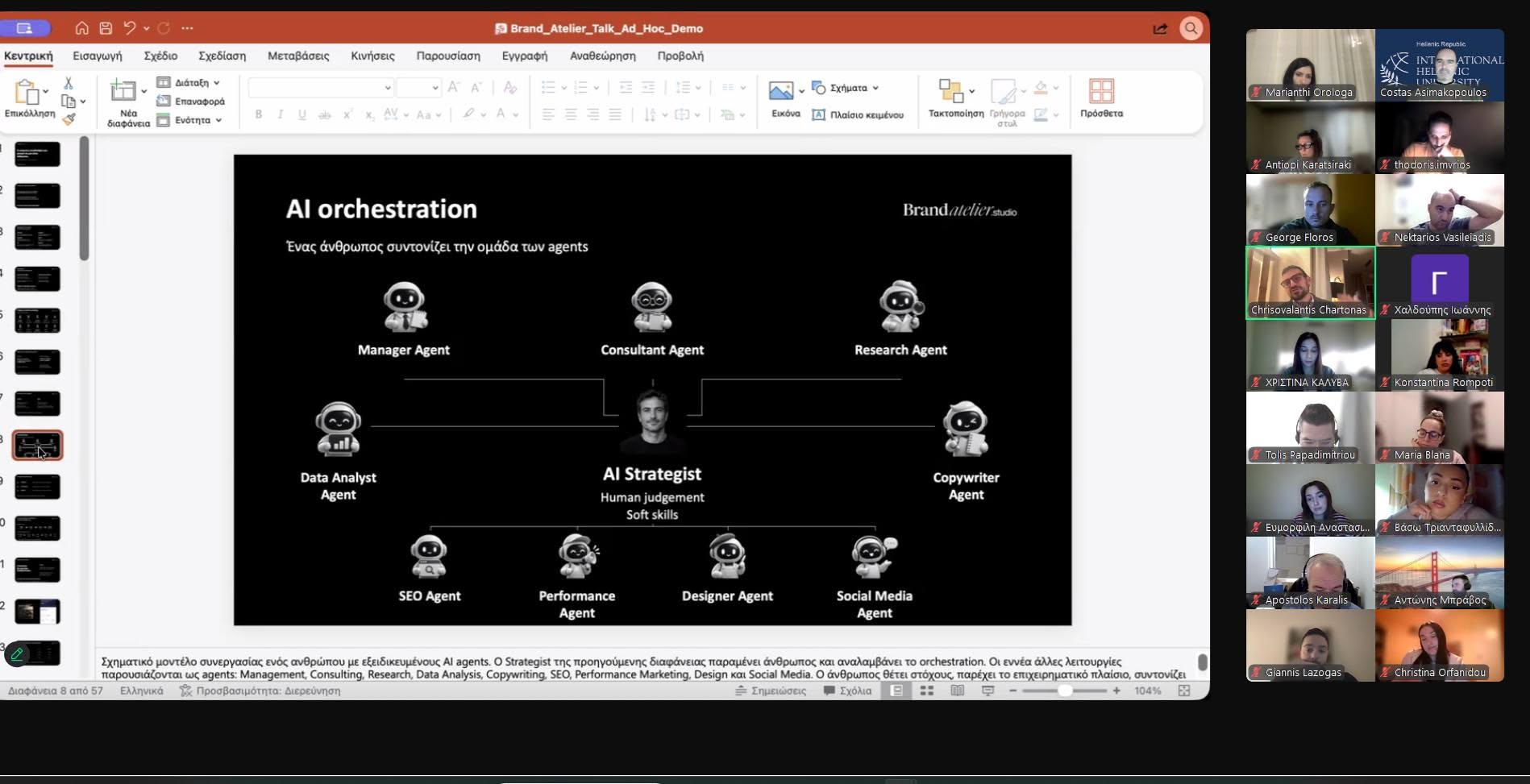
AI agents can help businesses carry out connected tasks across different tools, using business information and predefined permissions. Their usefulness depends on the context they receive, the systems they can access and the judgement applied to their work.
“The next colleague you work with might not be human.”
This was the starting point of a recent talk I gave to MBA students, returning as an alumnus to share perspectives from more than ten years working in marketing.
The audience brought experience from accounting, manufacturing, logistics, hospitality, retail, engineering and HR. That made the discussion particularly valuable: although my demonstrations focused on marketing, the questions extended across everyday business operations.
Where can an AI agent contribute? What should it be allowed to do? And what remains our responsibility?
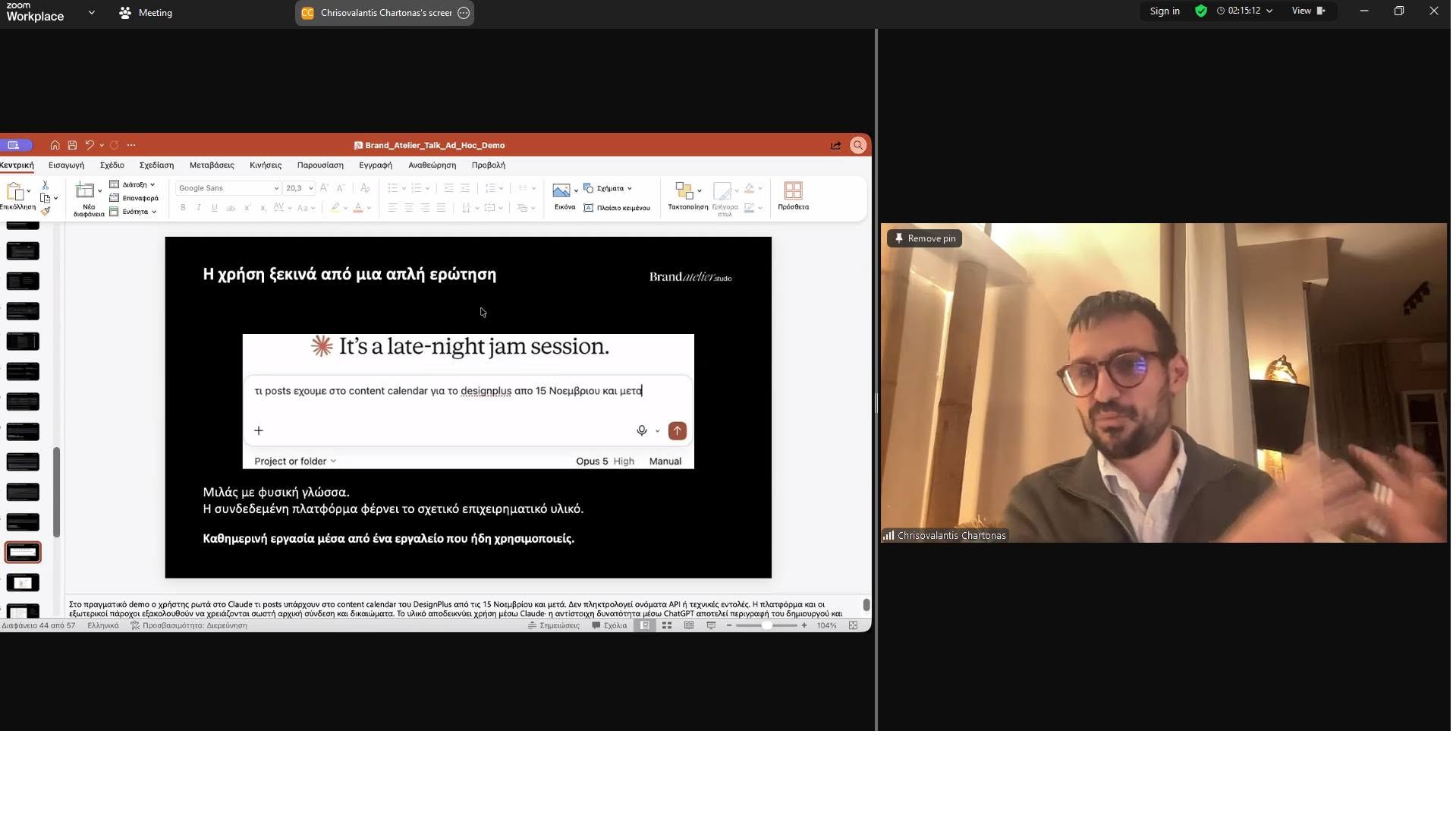
What is the difference between an AI assistant and an AI agent?
An AI assistant might help you write an email, summarise a report or explore an idea.
An agentic workflow can connect several steps. With appropriate integrations and permissions, it might retrieve information, compare it against business rules, prepare a recommendation and carry out an approved action.
Consider a supplier comparison. An assistant could help you write a request for quotations. An agent could gather the responses, compare delivery dates and specifications, flag missing information and prepare a purchase request for review.
This requires access to the relevant information and a clearly defined process. A conversational interface alone does not provide either.
A well-written answer can still miss the business problem
One example in the talk involved two business owners asking AI the same marketing question.
Both could receive clear, persuasive answers. Yet their businesses might have different margins, stock availability, customer objections or operational constraints.
A recommendation to increase advertising could be reasonable for one and unsuitable for the other.
The same issue applies to recommendations inside individual marketing platforms. A campaign may appear promising according to advertising metrics while the business faces limited stock, weak profitability or problems converting enquiries.
Those recommendations need interpretation within the wider business.
The quality of an AI recommendation depends partly on what the system knows, what it cannot see and whether it makes those limits visible.
Business context changes the recommendation
Useful context includes more than website analytics.
Depending on the business and the available integrations, it may include:
Commercial objectives, positioning and operational constraints.
GA4, Search Console and advertising performance.
Product availability, margins and sales information.
Customer conversations, recurring objections and service requests.
Search demand, competitors and previous decisions.
These inputs can change the question being answered.
Instead of asking, “Which campaign should receive more budget?”, the business may need to ask, “Which products can we profitably promote, fulfil and support?”
At Brand Atelier, this is the purpose of the Strategic Intelligence platform: connecting business context with analysis and practical decisions.
Facts and assumptions need different treatment
A useful business system should make its reasoning open to examination.
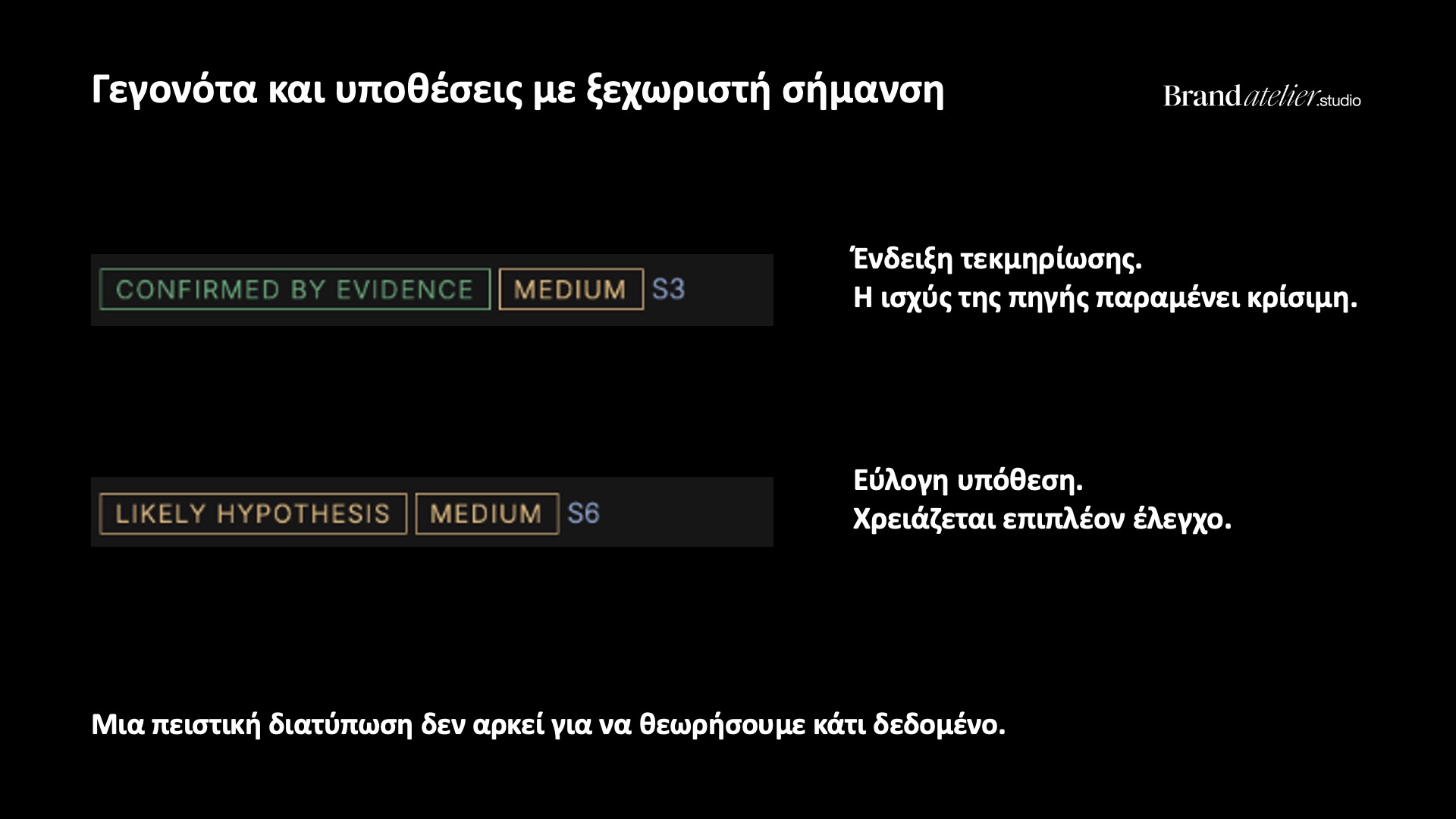
An observed result, a likely explanation and a proposed action are different things.
For example, analytics might show that a product attracts significant attention. That does not establish why visitors are interested, whether they intend to buy or whether promoting it would be profitable.
During the demonstration, I showed how the platform distinguishes evidence from hypotheses and makes missing information visible.
This gives the person reviewing a recommendation something concrete to challenge. They can ask what supports it, what remains uncertain and what information could change the conclusion.
From strategic analysis to approved execution
Analysis becomes more useful when it connects to the work that follows.
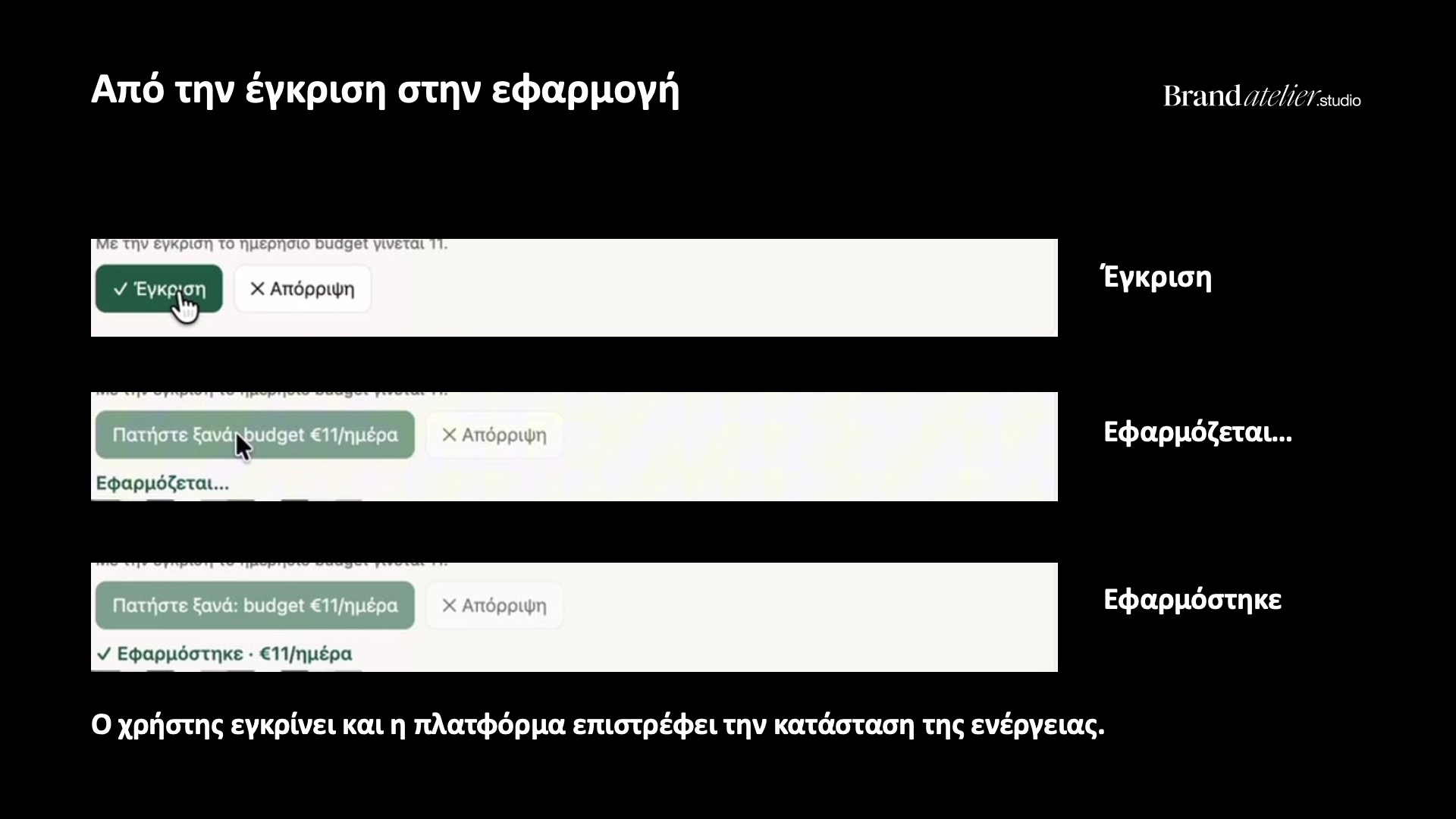
The platform demonstrations explored a workflow in which business context informs strategic priorities, those priorities guide content and campaign proposals, and review leads to approved execution.
A challenge stage acts as a “devil’s advocate”, examining weaknesses, alternative explanations and missing evidence before a proposal moves forward.
Human approval remains part of the demonstrated process. The reviewer can inspect the proposed action and decide whether it should proceed.
The resulting activity and performance then provide information for the next review.
An everyday example: analytics into social content
One demonstration began with a direct operational request: identify five products above a specified price with the most views during a recent period, then prepare social posts.
The workflow needed to consult analytics and check product information. It also exposed a practical limitation: the analytics data did not contain every detail required for the task.
That gap mattered. Product prices needed a separate check rather than an assumption.
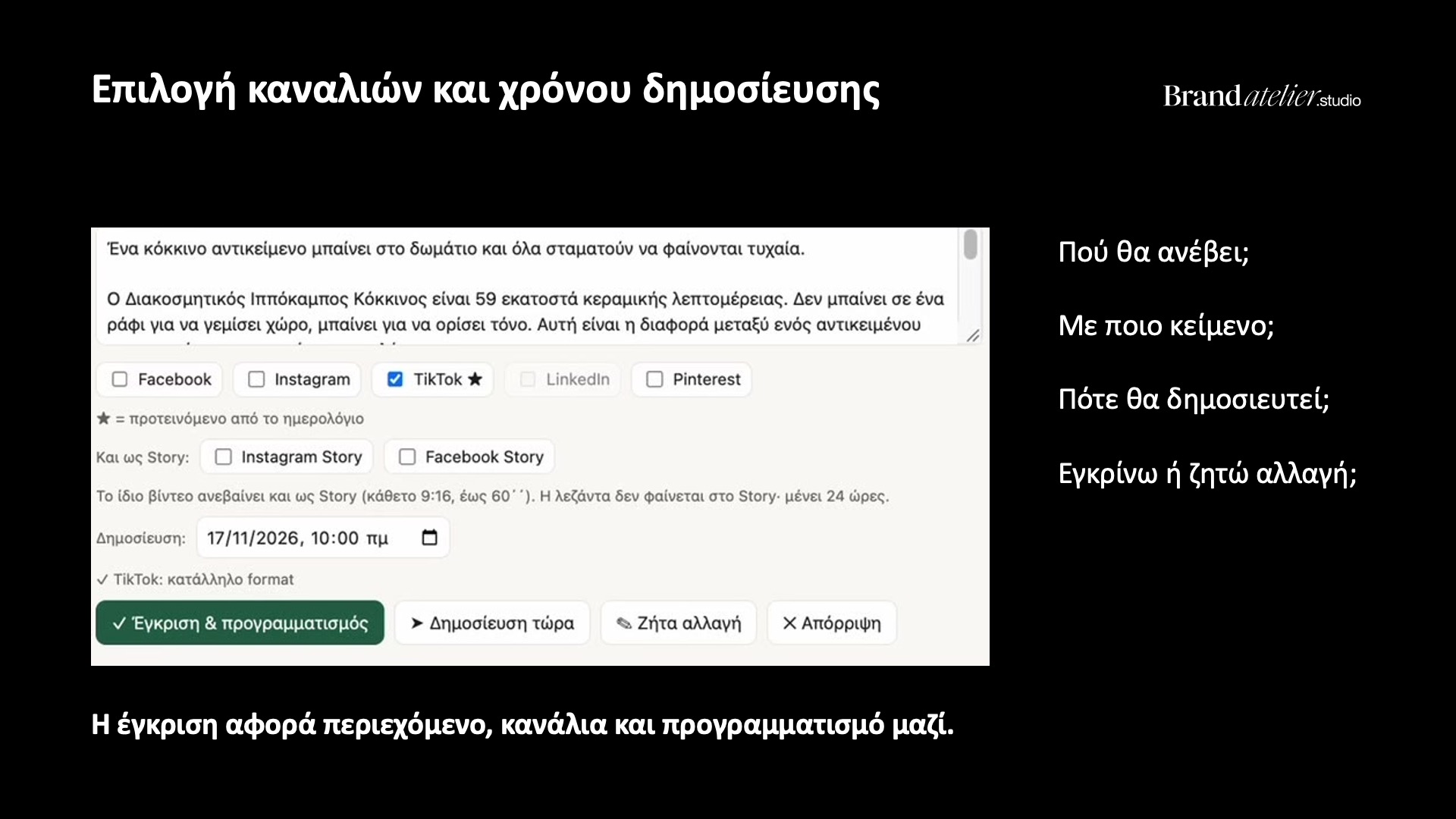
The resulting content could then move into review and scheduling. This showed how an ad hoc request can work alongside a planned social calendar.
It resembles briefing a junior colleague: explain the task, provide access to the relevant information and review the work before publication.
Where AI agents can help beyond marketing
The same approach applies to other recurring business processes.
An accounting team could use an agent to identify missing documents. A procurement team could prepare supplier comparisons. A logistics team could organise shipment updates, while HR could coordinate onboarding tasks.
A useful starting point is a process where people repeatedly collect information from several systems before deciding what happens next.
The process should have a clear owner, accessible inputs and an outcome that can be checked.
Human judgement remains part of the work
Faster production increases the importance of choosing carefully.
In marketing, generating more content does not guarantee a stronger idea, a distinctive voice or a better understanding of the audience. Someone still needs to decide what deserves to be published and what should be rejected.
The same responsibility appears in other professions. People define objectives, interpret exceptions and consider consequences that may be absent from the available data.
My central message to the MBA audience was that professional value increasingly includes the ability to direct these systems and evaluate their work.
Where should a business begin?
Start with one recurring task that consumes time and has a clear review point.
Define the information it needs, the actions it may take and the situations that require a person’s decision. Then assess its work against the existing process.
Useful measures might include preparation time, correction rates, unresolved exceptions and the quality of the final output.
At Brand Atelier, I use this approach to connect strategic intelligence with marketing execution and custom AI business workflows.
If you want to explore an agentic workflow for your business, bring one recurring process to a demonstration. We can examine the information it needs, the decisions involved and where human approval belongs.
Let's Discuss Your Business Workflow
Special thanks to Dr. Konstantinos Asimakopoulos for the invitation to speak with the MBA cohort at International Hellenic University.
About the author
Chrysovalantis Chartonas is the founder of Brand Atelier, a strategic intelligence and creative execution studio based in Thessaloniki, Greece. With a background in Marketing, an MBA and more than ten years of professional experience, he works on business strategy, agentic marketing workflows and digital experiences.
